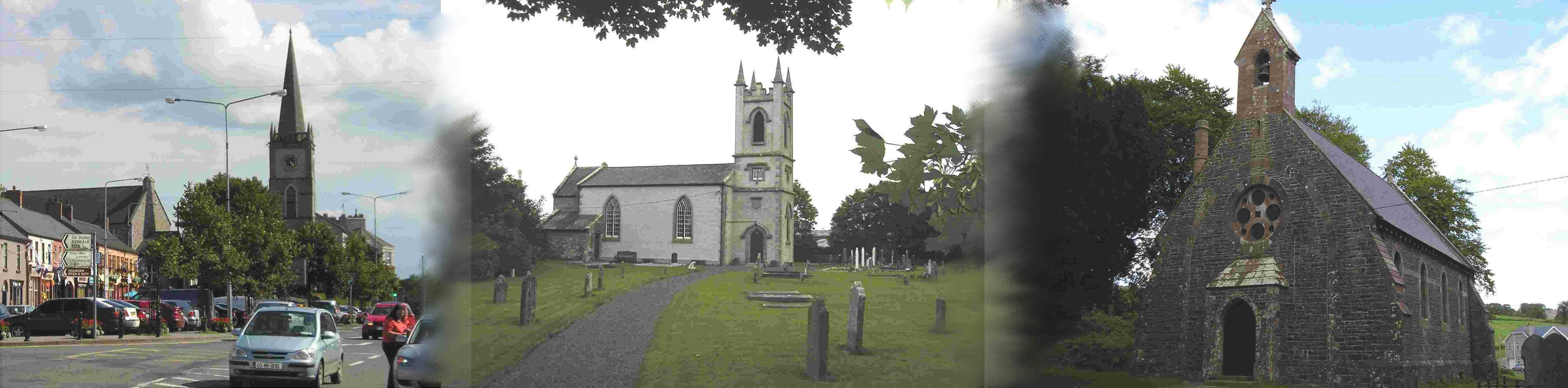
 Carrickmacross,
Magheracloone and Ardragh Group of Parishes
Carrickmacross,
Magheracloone and Ardragh Group of ParishesMinistry
Contact us:
Address: The Rectory, Drumconrath Road, Carrickmacross, Co. Monaghan, Ireland
In Charge: The Rural Dean, The Rev. Canon Ian Berry, The Rectory, Clones Road, Monaghan.
Baptism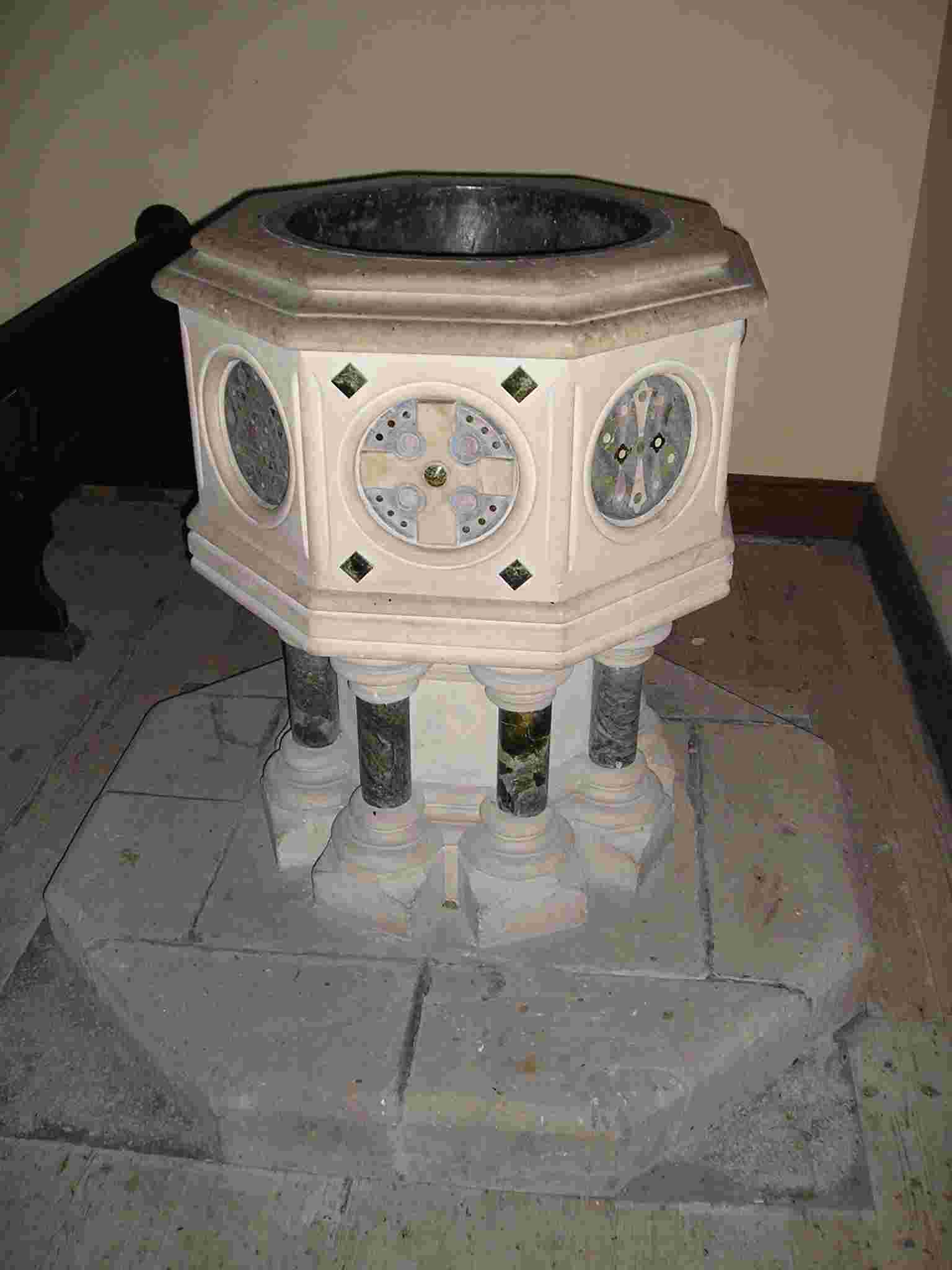
While we understand that adult believers Baptism is the norm we believe it is proper to baptise the infant children of believers on the understanding that they will be brought up 'in the fear and nurture of the Lord'. In this we believe we are following the example of those Apostles who baptised whole households. We require baptised members to make their own public decision for the Lord when they come for Confirmation. We do not practice 'indiscrimate baptism' but will not refuse baptism to those who come with a genuine desire for Baptism and a willingness to undertake the obligations involved.
In no circumstances do we re-baptise people already baptised, but if requested we do receive into the fellowship of our church people already baptised elsewhere. We do not talk about 'converting' members of other Christian denominations who join us, strictly speaking conversion is the term used for those who join us from other world religions or who practiced no religion.
Those seeking baptism for themselves or their children should in the first instance contact the Rector.
 Confirmation
Confirmation is administered by the Bishop every second year or so in the Parish to candidates who have decided to take on themselves the vows of their Baptism and wish to enter full communicant life of the church. Confirmation is preceeded by a period of preparation during which the church's Catechism is studied, the basic teaching of the church is outlined and the obligations of church membership are explained.
Those interested in Confirmation should make contact with the Rector at least a year before they might like to make their confirmation and be confirmed.
Marriage
Marriage is understood by our church as being a life long commitment by persons of opposite gender as an expression of human love, for the proper ordering of our sexual desires and for the proper upbringing of children.
Permission to marry in Church of Ireland churches is limited by civil law which, in the Republic of Ireland, is currently being changed. Basically, at present,couples seeking marriage in our church need to aquire a licence from a church or civil registrar or a special licence from the Bishop. In very limited circumstances people can still be married after the reading of banns but this will almost certainly disappear when the new legislation is implimented.
To get a licence at least one party has to be a 'Protestant Episcopalian' which means Church of Ireland or a church in communion therewith which really means Anglican, Church of Ireland, Church in Scotland, PECUSA and so on.
The re-marriage of divorced persons is permitted in some circumstances and after certain conditions have been met but clergy are allowed in conscience to refuse to take part in such ceremonies. If they do arrangements may be discussed with the Archdeacon.
Given all the complexities of marriage law and church discipline, and even more so now that the whole Marriage Law in the Republic of Ireland is about to be changed, it is advisable to begin to discuss marriage with the clergy a year or at the very least nine months before a proposed date for a marriage, and most certainly not after the Hotel has been booked for the reception!
Sickness
Our blessed Lord went about 'doing good and healing all manner of sickness' and St. James tells us that the elders of the church should be called to pray over and anoint with oil those who are sick. Ministry to the sick is a central part of the ministry, both clerical and lay, of the church and so we incorporate prayer for the sick into most acts of worship and offer laying on of hands and anointing at special services both in church and in the home. It is important that people or their friends request these ministries because we see so often in our Lord's ministry that the acknowledges the faith of friends and others to be a contributing factor in the healing of the the sick.
The clergy should be called on at any time where there is a need for leadership in this ministry but it is the privilege of all members of the church to pray for and with the sick taking into account the patients feelings and wishes. Clergy should be called when it appears that someone is close to death and as soon as possible immediately after death as the Book of Common Prayer provides special prayers for both these situations.
We do not anoint those who are dying, Holy Communion, or Viaticum is strictly speaking the sacrament for the dying, Anounting with oil is for the sick who have some hope of recovery.
Home Visitation
Legislation is making the whole area of visiting homes more problematic but there has been in our church a very long tradition of pastoral visiting, with the clergy visiting the homes of parishioners on a regular basis. In the current climate it is more suitable if parishioners request visits from the clergy and arrange specific times convenient to both for such visits. In the normal course of events in a parish there will be opportunites and a need for short unscheduled visits: organising events, discussing involvement in worship etc. but in other circumstances it is probably best nowadays if parishioners request clergy to come to their homes.
Problems
Unless they have a specific interest and have received special trainng clergy are not social workers, councellors or legal and financial advisors. Clergy specialise in the formation and development of an individuals (and the communities) awareness of and relationship with God. However, within this area all other sorts of problems need to be aired and to be fitted into context so that people and communities can be helped to move forward in their relationship with God. Only through this can they begin to know the redemption, the buying back of what was lost, which alone can allow them to discover the freedom to move on in their lives. So do bring up problems in confidence with the clergy not in the expectation of finding easy answers or a quick handout, but in the hope of coming to understand the grace of God which is sufficient for all our needs. The clergy will also continue to pray about these situations which have been brought to their attention and all of us know situations where such prayer and time have brought remarkable healing.
Death
One of the particular duties of the clergy is to prepare people for death and to be able to speak in a personal way at each parishioners funeral. Indeed one of the unofficial definitions we use for who is a parishioner is whether they will expect us to bury them! One of the leftovers from the 'establishment' past of our church is that we cannot refuse to bury anyone in our parish area who we are asked to bury and where there is no other church involved. Everyone in our parish area has the right to be a member of any church they wish, but if they belong to no church they are our responsibility for burial, even if they have never come near us in life!
Parish Organisation
There are fuller explanations of our churches structures elsewhere so we just give a quick outline. All communicant members of our church who are over 18 may register as 'General Vestry Members'. This gives them the right to attend the 'Easter General Vestry', the annual general meeting of the parish. At this church officers or 'wardens' and a steering committee, the Select Vestry, are elected for the year and they, not the clergy, have the responsibility for the 'fabric, furnishing and finances' of the parish. Every three years the Easter Vestry (which meets within the two weeks prior to or following Easter) elects people to serve on the Diocesan Synod which meets annually. This in turn elects a steering committee, called the Diocesan Council and other Diocesan officials and also elects representatives to sit on the General Synod, the Church of Irelands governing assembly, where Bishops, clergy and laity have equal voting rights. So while we claim to be part of the universal, catholic church, we are also a national church with strongly democratic structures and a 'bottom up' understanding of how the Holy Spirit works within the church in practical matters combined with a 'top down' concept of how the authoritatve teaching ministry is inspired.
Virtually all church properties are vested in a Trustee Body, known as the Representative Church Body. This arrangements avoids individual members of the church finding themselves in legal or financial difficulties when serious problems arise with church properties. The RCB also administers money left to the church by individuals, all bequests and endowments, as this is the only way we can fully comply with the law of the land.
Ordained and Lay Minstry
The Church of Ireland has seen its ministry develop in remarkable ways over the past century and a half. From an exclusively full time, paid ordained ministry in worship leadership and pastoral care we have moved to a much more varied pattern.
In terms of the leadership of worship we now have laity reading lessons, leading prayers and being responsible for the music ministry. Lay people can also be licenced as Parish Readers, permitted to lead whole acts of worship and read homilies prepared by the clergy.
The lay ministry of Diocesan Readers has grown strongly in the church with may church members eminent in their own professions and employment being authorised to lead worship and preach. Diocesan Readers have brought a rich vein of experience and spirituality to our church. They are not, however, qualified to celebrate the Sacraments.
Over the past thirty years or so the non-stipendary full time ordained ministry has developed strongly. This provides fully authorised clergy to the diocese with a strong local attachment and experience. Such clergy usually assist in parishes or engage in specialised ministries such as hospital chaplaincy, thoug in some cases they now run parishes as well as engaging in their full time civilian occupations. This is a very demanding role but one that is much valued by the laity who see such clergy as coping with very similar pressures to those experienced by themsleves.
The full time, paid, ordained ministry is still th backbone of the churches diocesan and parish structures. While the majority of clergy, men and women, are now ordained at a more mature and bring a wealth of knowledge and experience of life to the ministry it is also very encouraging to find so many bright young people, often with doctoral and other advanced qualifications bringing their enthusiasm and freshness to the ministry. All these categories of ordinands frequently give up well paid work or positions with good prospects to join the ministry.
From a situation in the last half of the 20th century where the Church of Ireland seemed to be slowly 'shutting up shop' there is now real evidence of growth, spiritual and even numerical! for which we give thanks to God. Our church is only as a tool in God's hands for the building of the Kingdom. It seemed for many years as if He had very little place for us in his purposes, now we pray God we may have the obedience and willingness to be used in the opportunities that offering themselves in these exciting and changing times.
Parish Newsletter
Contact us:
Address: The Rectory, Drumconrath Road, Carrickmacross, Co. Monaghan, Ireland
In Charge: The Rural Dean, The Rev. Canon Ian Berry, The Rectory, Clones Road, Monaghan.
Baptism
While we understand that adult believers Baptism is the norm we believe it is proper to baptise the infant children of believers on the understanding that they will be brought up 'in the fear and nurture of the Lord'. In this we believe we are following the example of those Apostles who baptised whole households. We require baptised members to make their own public decision for the Lord when they come for Confirmation. We do not practice 'indiscrimate baptism' but will not refuse baptism to those who come with a genuine desire for Baptism and a willingness to undertake the obligations involved.
In no circumstances do we re-baptise people already baptised, but if requested we do receive into the fellowship of our church people already baptised elsewhere. We do not talk about 'converting' members of other Christian denominations who join us, strictly speaking conversion is the term used for those who join us from other world religions or who practiced no religion.
Those seeking baptism for themselves or their children should in the first instance contact the Rector.
ConfirmationConfirmation is administered by the Bishop every second year or so in the Parish to candidates who have decided to take on themselves the vows of their Baptism and wish to enter full communicant life of the church. Confirmation is preceeded by a period of preparation during which the church's Catechism is studied, the basic teaching of the church is outlined and the obligations of church membership are explained.
Those interested in Confirmation should make contact with the Rector at least a year before they might like to make their confirmation and be confirmed.
Marriage
Marriage is understood by our church as being a life long commitment by persons of opposite gender as an expression of human love, for the proper ordering of our sexual desires and for the proper upbringing of children.
Permission to marry in Church of Ireland churches is limited by civil law which, in the Republic of Ireland, is currently being changed. Basically, at present,couples seeking marriage in our church need to aquire a licence from a church or civil registrar or a special licence from the Bishop. In very limited circumstances people can still be married after the reading of banns but this will almost certainly disappear when the new legislation is implimented.
To get a licence at least one party has to be a 'Protestant Episcopalian' which means Church of Ireland or a church in communion therewith which really means Anglican, Church of Ireland, Church in Scotland, PECUSA and so on.
The re-marriage of divorced persons is permitted in some circumstances and after certain conditions have been met but clergy are allowed in conscience to refuse to take part in such ceremonies. If they do arrangements may be discussed with the Archdeacon.
Given all the complexities of marriage law and church discipline, and even more so now that the whole Marriage Law in the Republic of Ireland is about to be changed, it is advisable to begin to discuss marriage with the clergy a year or at the very least nine months before a proposed date for a marriage, and most certainly not after the Hotel has been booked for the reception!
Sickness
Our blessed Lord went about 'doing good and healing all manner of sickness' and St. James tells us that the elders of the church should be called to pray over and anoint with oil those who are sick. Ministry to the sick is a central part of the ministry, both clerical and lay, of the church and so we incorporate prayer for the sick into most acts of worship and offer laying on of hands and anointing at special services both in church and in the home. It is important that people or their friends request these ministries because we see so often in our Lord's ministry that the acknowledges the faith of friends and others to be a contributing factor in the healing of the the sick.
The clergy should be called on at any time where there is a need for leadership in this ministry but it is the privilege of all members of the church to pray for and with the sick taking into account the patients feelings and wishes. Clergy should be called when it appears that someone is close to death and as soon as possible immediately after death as the Book of Common Prayer provides special prayers for both these situations.
We do not anoint those who are dying, Holy Communion, or Viaticum is strictly speaking the sacrament for the dying, Anounting with oil is for the sick who have some hope of recovery.
Home Visitation
Legislation is making the whole area of visiting homes more problematic but there has been in our church a very long tradition of pastoral visiting, with the clergy visiting the homes of parishioners on a regular basis. In the current climate it is more suitable if parishioners request visits from the clergy and arrange specific times convenient to both for such visits. In the normal course of events in a parish there will be opportunites and a need for short unscheduled visits: organising events, discussing involvement in worship etc. but in other circumstances it is probably best nowadays if parishioners request clergy to come to their homes.
Problems
Unless they have a specific interest and have received special trainng clergy are not social workers, councellors or legal and financial advisors. Clergy specialise in the formation and development of an individuals (and the communities) awareness of and relationship with God. However, within this area all other sorts of problems need to be aired and to be fitted into context so that people and communities can be helped to move forward in their relationship with God. Only through this can they begin to know the redemption, the buying back of what was lost, which alone can allow them to discover the freedom to move on in their lives. So do bring up problems in confidence with the clergy not in the expectation of finding easy answers or a quick handout, but in the hope of coming to understand the grace of God which is sufficient for all our needs. The clergy will also continue to pray about these situations which have been brought to their attention and all of us know situations where such prayer and time have brought remarkable healing.
Death
One of the particular duties of the clergy is to prepare people for death and to be able to speak in a personal way at each parishioners funeral. Indeed one of the unofficial definitions we use for who is a parishioner is whether they will expect us to bury them! One of the leftovers from the 'establishment' past of our church is that we cannot refuse to bury anyone in our parish area who we are asked to bury and where there is no other church involved. Everyone in our parish area has the right to be a member of any church they wish, but if they belong to no church they are our responsibility for burial, even if they have never come near us in life!
Parish Organisation
There are fuller explanations of our churches structures elsewhere so we just give a quick outline. All communicant members of our church who are over 18 may register as 'General Vestry Members'. This gives them the right to attend the 'Easter General Vestry', the annual general meeting of the parish. At this church officers or 'wardens' and a steering committee, the Select Vestry, are elected for the year and they, not the clergy, have the responsibility for the 'fabric, furnishing and finances' of the parish. Every three years the Easter Vestry (which meets within the two weeks prior to or following Easter) elects people to serve on the Diocesan Synod which meets annually. This in turn elects a steering committee, called the Diocesan Council and other Diocesan officials and also elects representatives to sit on the General Synod, the Church of Irelands governing assembly, where Bishops, clergy and laity have equal voting rights. So while we claim to be part of the universal, catholic church, we are also a national church with strongly democratic structures and a 'bottom up' understanding of how the Holy Spirit works within the church in practical matters combined with a 'top down' concept of how the authoritatve teaching ministry is inspired.
Virtually all church properties are vested in a Trustee Body, known as the Representative Church Body. This arrangements avoids individual members of the church finding themselves in legal or financial difficulties when serious problems arise with church properties. The RCB also administers money left to the church by individuals, all bequests and endowments, as this is the only way we can fully comply with the law of the land.
Ordained and Lay Minstry
The Church of Ireland has seen its ministry develop in remarkable ways over the past century and a half. From an exclusively full time, paid ordained ministry in worship leadership and pastoral care we have moved to a much more varied pattern.
In terms of the leadership of worship we now have laity reading lessons, leading prayers and being responsible for the music ministry. Lay people can also be licenced as Parish Readers, permitted to lead whole acts of worship and read homilies prepared by the clergy.
The lay ministry of Diocesan Readers has grown strongly in the church with may church members eminent in their own professions and employment being authorised to lead worship and preach. Diocesan Readers have brought a rich vein of experience and spirituality to our church. They are not, however, qualified to celebrate the Sacraments.
Over the past thirty years or so the non-stipendary full time ordained ministry has developed strongly. This provides fully authorised clergy to the diocese with a strong local attachment and experience. Such clergy usually assist in parishes or engage in specialised ministries such as hospital chaplaincy, thoug in some cases they now run parishes as well as engaging in their full time civilian occupations. This is a very demanding role but one that is much valued by the laity who see such clergy as coping with very similar pressures to those experienced by themsleves.
The full time, paid, ordained ministry is still th backbone of the churches diocesan and parish structures. While the majority of clergy, men and women, are now ordained at a more mature and bring a wealth of knowledge and experience of life to the ministry it is also very encouraging to find so many bright young people, often with doctoral and other advanced qualifications bringing their enthusiasm and freshness to the ministry. All these categories of ordinands frequently give up well paid work or positions with good prospects to join the ministry.
From a situation in the last half of the 20th century where the Church of Ireland seemed to be slowly 'shutting up shop' there is now real evidence of growth, spiritual and even numerical! for which we give thanks to God. Our church is only as a tool in God's hands for the building of the Kingdom. It seemed for many years as if He had very little place for us in his purposes, now we pray God we may have the obedience and willingness to be used in the opportunities that offering themselves in these exciting and changing times.
Parish Newsletter
| Main Page | Worship | Activities | Children | Teaching |
| Ministry | History | Links | Churches | News |